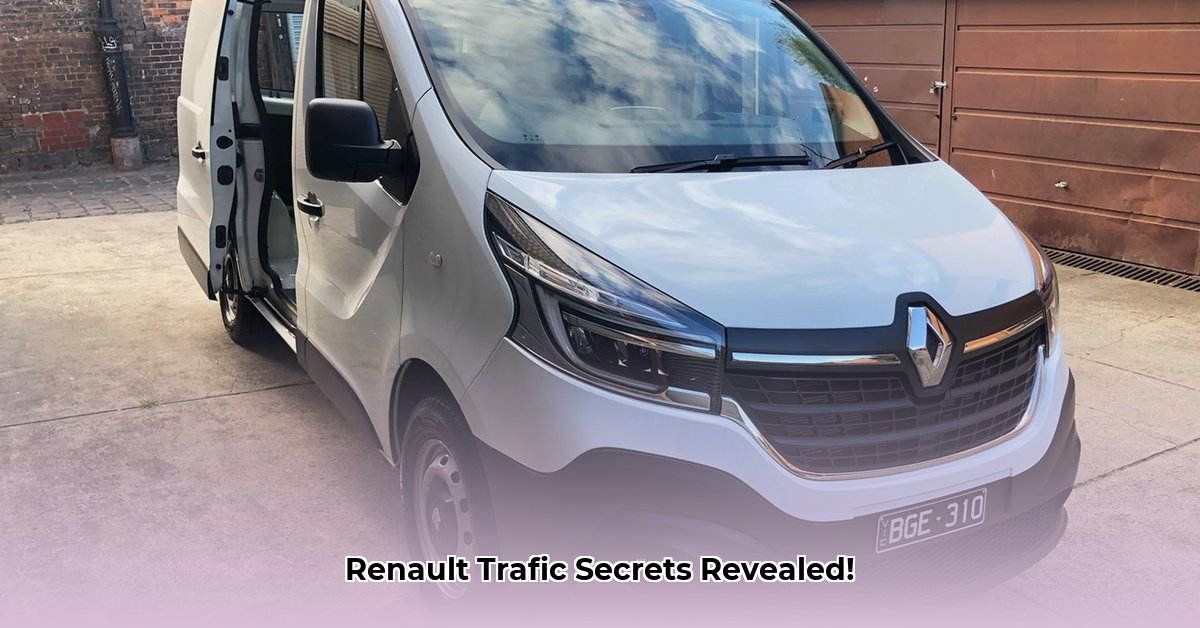
Renault Trafic: A Van's Enduring Legacy
The Renault Trafic's history isn't just a tale of a van; it's a compelling narrative of adaptation, strategic partnerships, and continuous technological evolution within the dynamic commercial vehicle market. Since its 1980 debut, this workhorse has undergone numerous transformations, navigating shifting market demands and technological advancements with remarkable resilience. Its success hinges on a unique blend of adaptability and smart collaborations. But how has this adaptability impacted its market standing, and what challenges lie ahead?
A Global Identity: Rebranding and Market Reach
The Trafic's design hasn't been confined to a single nameplate. Over the years, it's been sold under various brands—Opel/Vauxhall, Nissan, Fiat, and Mitsubishi, significantly expanding its global reach. However, this extensive rebranding raises a crucial question: Did it compromise the Trafic's unique identity? While some argue that rebadging diluted brand cohesion, others contend it broadened appeal and secured a foothold in diverse markets. Its continued popularity suggests that the strategy, while complex, ultimately proved successful. Did the global rebranding ultimately benefit or hinder the Trafic's long-term success? Only further analysis can provide a definitive answer.
Technological Advancements: From Four-Wheel Drive to Electric
Early Trafic models offered practical features, including the then-uncommon four-wheel-drive option. However, its evolution has been marked by significant technological leaps. The introduction of plug-in hybrid concepts and the fully electric Trafic E-Tech demonstrates Renault's commitment to innovation and competitiveness in a rapidly evolving market. Yet, even with this progress, the current electric model's 297km WLTP range (based on official testing) presents a potential limitation. While suitable for many, this range might restrict its practicality for users needing longer journeys between charges, highlighting the ongoing need for battery technology advancements.
Global Production: A Strategic Network
The Trafic's production across diverse locations—Luton (UK), Barcelona (Spain), and Sandouville (France)—reflects its global ambitions. This decentralized manufacturing approach minimizes risks associated with single-site production, allowing Renault to effectively adapt the vehicle to specific market needs and regulations, giving it a competitive edge. How has this geographically diversified production strategy contributed to the Trafic's overall market share and profitability? Further research into the logistics and economic benefits is warranted.
Niche Markets and Unexpected Successes
Beyond the standard commercial vehicle market, the Trafic's versatility has led to unexpected successes in niche sectors. Its adaptable chassis and design have made it a popular choice for campervan conversions. Further collaborations with Renault Trucks have expanded its reach into specialized commercial sectors, proving its ability to transcend its initial design parameters. What untapped markets could further utilize the Trafic’s versatile platform? This question points to potential future growth opportunities.
Navigating the Future: Challenges and Opportunities
The automotive industry faces increasingly stringent emissions regulations, presenting a major challenge for all manufacturers, including Renault. While the electric variant represents a significant step forward, improvements are crucial for long-term sustainability and competitiveness. Expanding the EV range and improving charging infrastructure are vital for the Trafic E-Tech to fully capture the electric van market. Additionally, exploring the potential of hydrogen fuel-cell technology as a cleaner, long-term solution offers another intriguing avenue for future development.
Actionable Insights and Predictions: A Stakeholder Perspective
The following table summarizes short-term and long-term goals for various stakeholders involved in the Renault Trafic's future. These are educated predictions, and the actual outcomes may differ based on technological advancements and market influences.
| Stakeholder | Short-Term Goals (0-1 Year) | Long-Term Goals (3-5 Years) |
|---|---|---|
| Renault | Optimize E-Tech production; aggressively target niche markets (e.g., camper vans). | Invest heavily in battery technology; significantly extend EV range; explore autonomous driving features; develop hydrogen capabilities. |
| Competitors (OEMs) | Enhance pricing and features to stay competitive; focus on improving electric vehicle offerings. | Explore potential partnerships or acquisitions to bolster market share and innovative capabilities. |
| Governments | Implement and strengthen emissions standards; increase incentives for electric vehicle adoption. | Significantly improve EV charging infrastructure; fund research into hydrogen fuel cell technology and other sustainable alternatives. |
| Consumers (Businesses) | Carefully evaluate individual needs; compare the total cost of ownership (TCO) of electric models. | Analyze long-term costs associated with EV ownership; include energy prices and government subsidies in their calculations. |
The Renault Trafic's journey is far from over. Its capacity to adapt and react to market changes will determine its long-term success. The next few years will be crucial in shaping what’s next for this enduring van.